Annual Report
FY 24/25
Features


A New Era
in
Custody Care
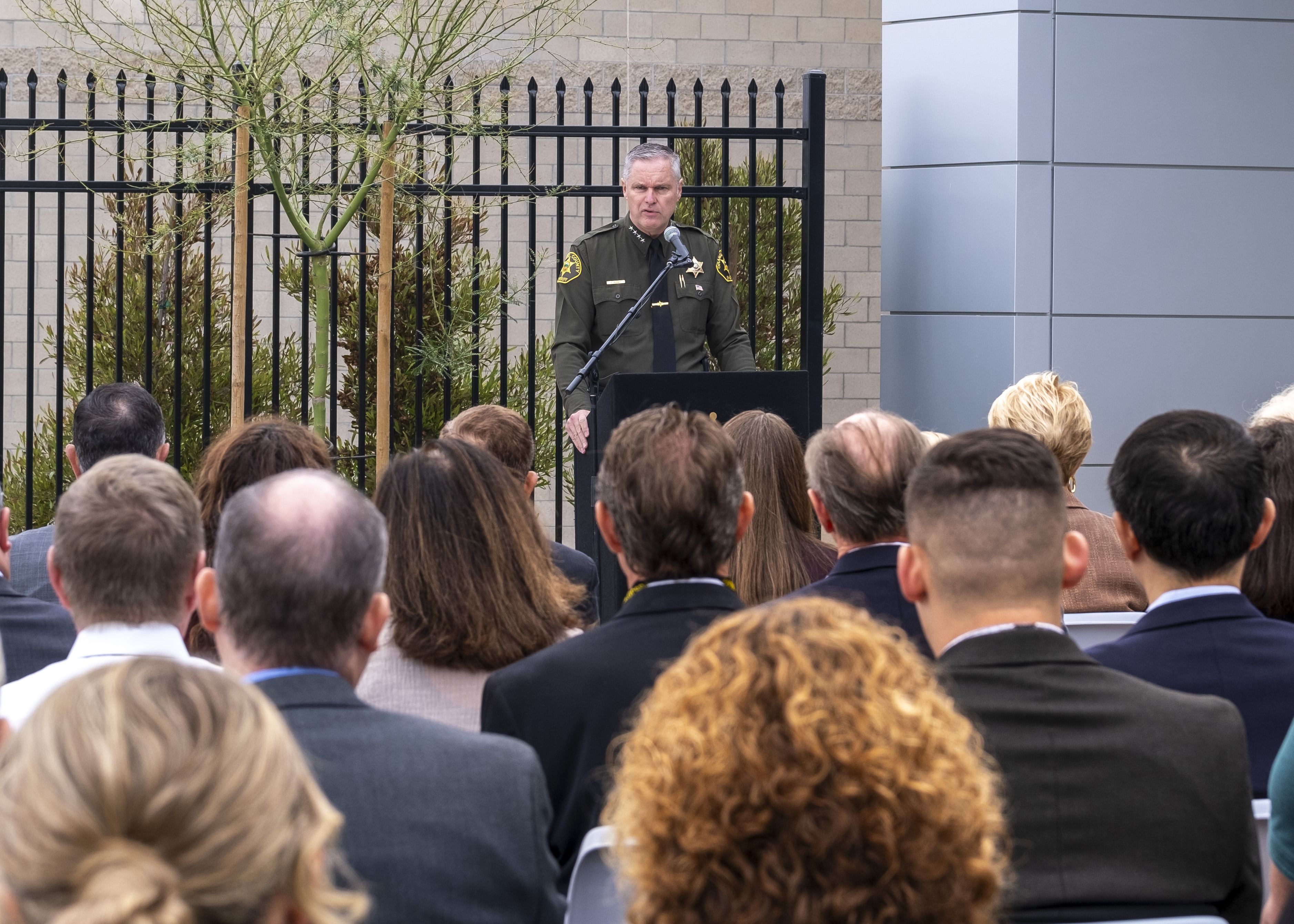
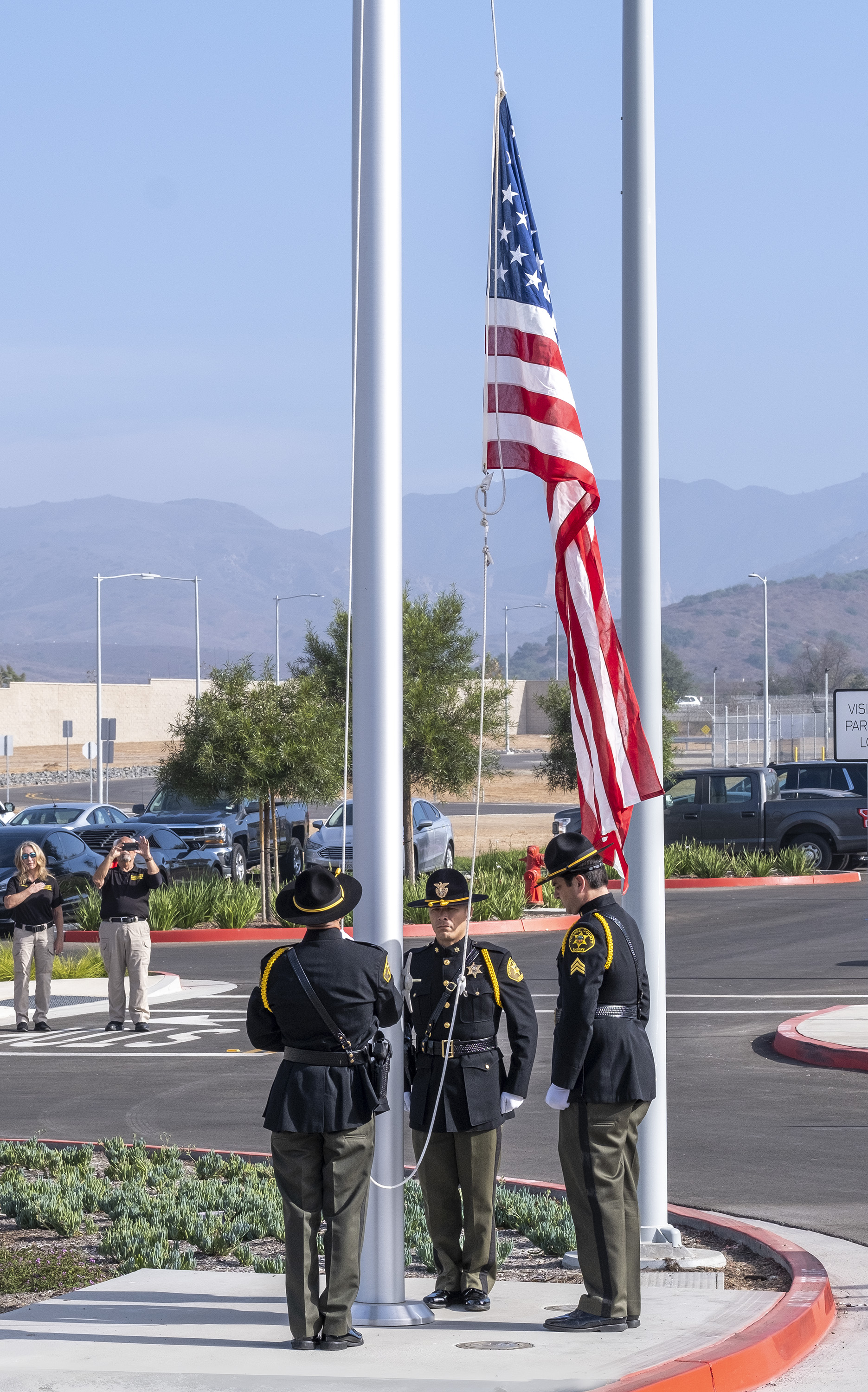
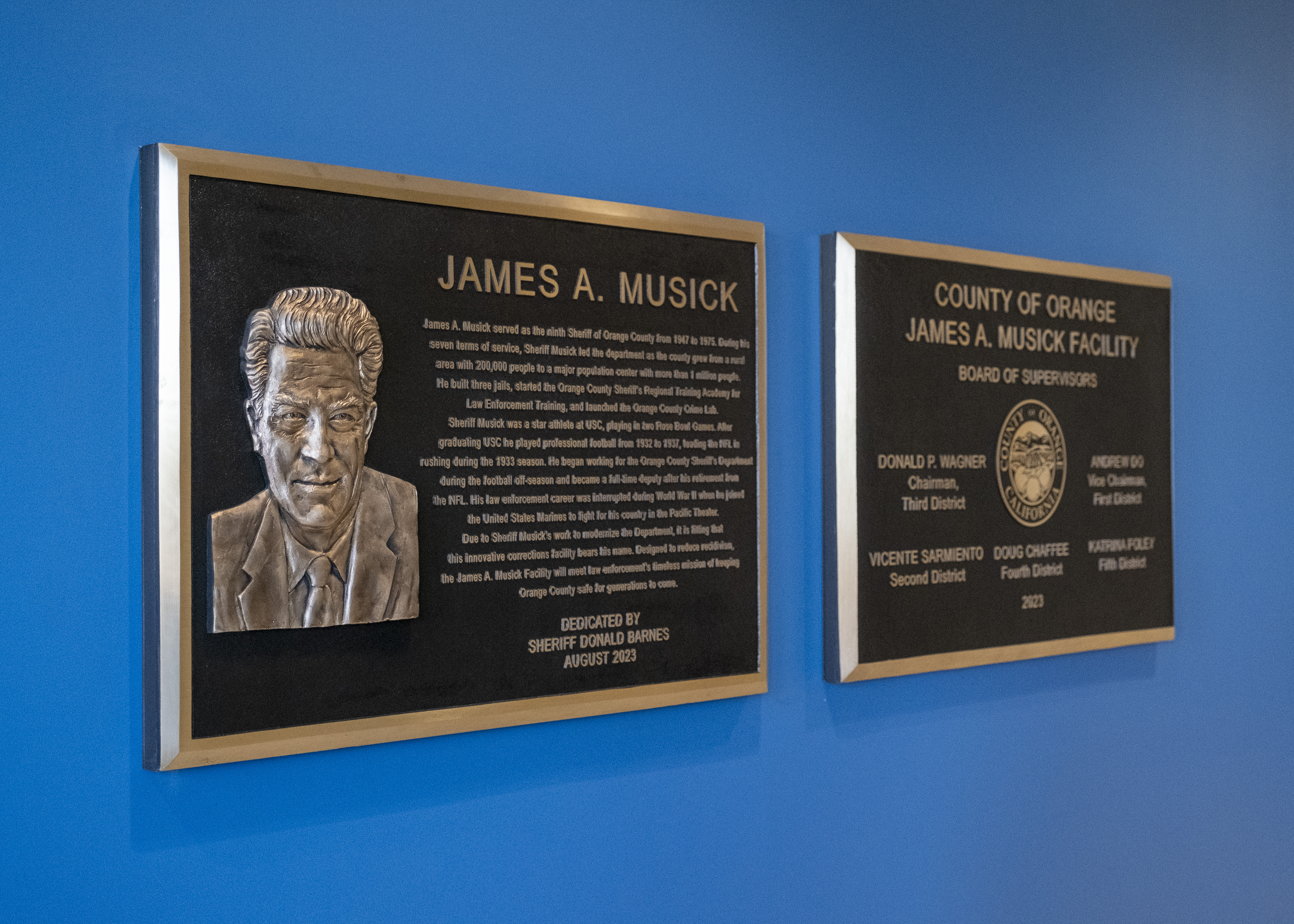
The OC Sheriff’s Department in October 2024 commemorated the completion of the new James A. Musick facility with a flag raising ceremony and grand opening event.
The 324,000 square-foot, 896-bed facility houses minimum and medium-security incarcerated persons under a direct-supervision model, which marks a departure from traditional custody facility designs.
The innovative facility focuses on increased rehabilitation services, enhanced safety and greater access to education and health services. Bringing services direct to those in custody creates a safer and more effective space for staff and inmates.
“What I’m most proud of today is the thought and intentional purpose of this facility to serve those who are entrusted to our care. We look at this as an opportunity to help put people back on their feet, when they’re willing, and successfully transition them back into the community,” said Sheriff Barnes. “I know we have the greatest team in the people who are assigned here who have that mission at their heart.”


From Crisis to Calm

Fortifying community trust in the midst of a crisis remains a critical part of our public safety mission.
The expertise of our personnel and the breadth and depth of our resources instill confidence that no matter the call, we will arrive in strength to help.
The Special Enforcement Bureau (SEB) is comprised of highly specialized teams that support patrol operations on a variety of high-risk calls for service.
SEB includes:
The Crisis Negotiations Team (CNT)
This year, CNT earned national recognition for exemplary skill in de-escalation and negotiation techniques. In FY 24-25, they responded to 17 call-outs, safely resolving each incident.
CNT is an ancillary duty for personnel, meaning team members, who include deputies, investigators, and sergeants, are selected to serve in addition to their regular field assignments.
The Hazardous Devices Section (HDS)
More commonly referred to as the Bomb Squad, HDS deploys countywide to respond to a variety of calls, including investigating reports of suspicious packages, rendering safe explosive devices, confiscating dangerous fireworks and explosives, and providing post-blast investigations.
The team includes technicians available to respond to all Orange County cities, along with team members assigned to John Wayne Airport, the Orange County Transportation Authority, the Orange County Superior Court, and Orange County jails.
On average, the team responds to between 600 and 800 calls every year. In FY 24-25, they responded to 605 calls for service.
In addition to callouts, the team, along with their K-9 partners, provides safety sweeps for dozens of events every year, including parades, concerts, and sporting events.
HDS is one team, among several, that can provide drone support on a variety of calls, giving personnel in the field additional perspective to navigate high-risk or complex calls for service.
The K-9 Unit
The K-9 Unit is a multidisciplinary team that assists with searching for suspects, evidence, and narcotics. In FY 24-25, the team was deployed 287 times, with 208 calls to support patrol operations and 79 calls for detection, which includes searching for narcotics or evidence.
Last year, the K-9 teams recovered two guns, ammunition, nearly 27 grams of fentanyl, and approximately 39 kilograms of other narcotics, such as heroin and methamphetamine.
The team encouraged 78 suspects to surrender and had eight apprehensions in FY 24-25.
Special Weapons and Tactics (SWAT) Team
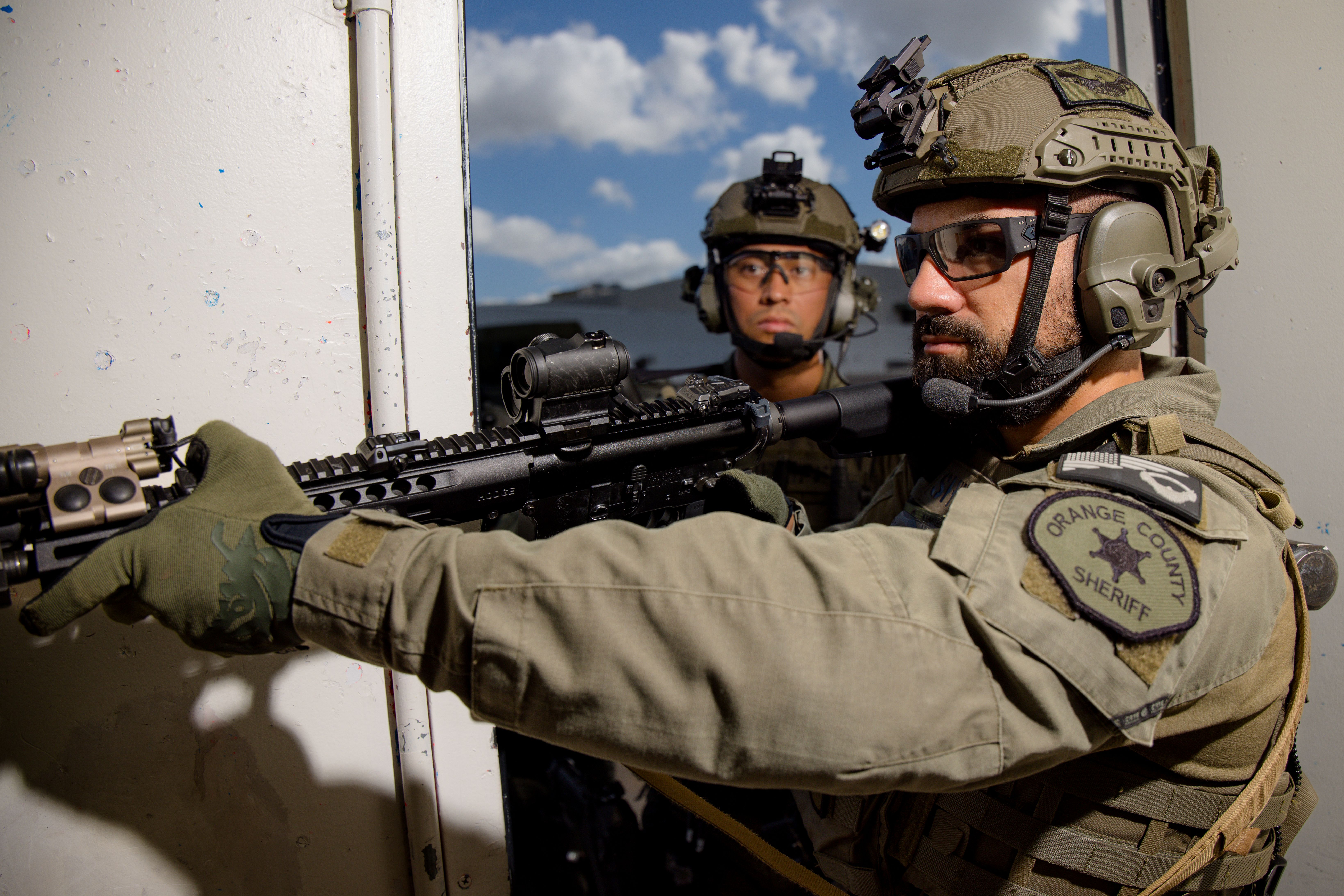
SWAT is a highly trained unit that provides operational support for patrol operations and is most often called to assist in dynamic, high-risk incidents such as barricaded suspects and hostage situations. In FY 24-25, they responded to 95 calls for service.
A subset of SWAT, the Tactical Apprehension Team, handles high-risk warrant services and locating fugitives in Southern California. They work in partnership with Orange County Probation and the U.S. Marshals Service to find and apprehend dangerous offenders.
A lesser-known function of the SWAT team is their expert training for patrol personnel and other law enforcement agencies in Orange County. Throughout the year, SWAT operators share their expertise to provide deputies with the tactics they need to safely and efficiently respond to a variety of calls. They teach active shooter response, building and room entry tactics, and how to safely serve a warrant. The team also conducts an annual SWAT school for partner agency SWAT teams to learn specialized tactics and skills.


Rehabilitation Today.
Safer Communities Tomorrow.
Investing in the care and rehabilitation of incarcerated individuals is an investment in the well-being of the community we serve.
At OC Sheriff, we offer more than 50 programs to give those entrusted to our care the opportunity to improve their lives and make healthier and more productive choices in the future.
Providing pathways for improvement strengthens community stability and safety.

Re-entry programs see reduction in recidivism
Re-entry programs are those focused on giving incarcerated persons the tools they need to become contributing members of our communities upon release. With programs focused on life skills, job enrichment, and education, OC Sheriff Inmate Programs offers a robust roster of programs to appeal to the individual needs of those entrusted to our care.
Over the years, we have seen a marked decrease in recidivism rates for those participating in programs tailored to life after release. Incarcerated individuals who choose not to participate in jail programs have a one-year recidivism rate of nearly 49%. Here is a look at how OC Sheriff’s re-entry program have impacted these one-year recidivism rates.
*Data collected is based on the 21-22 FY. Stats were rounded to the nearest ten.
Back on Track: 28% recidivism rate
Back on Track provides incarcerated persons with useful employment techniques to assist with job placement post-release. The course includes resume writing, interviewing techniques, communication skills, and proper dress attire.
Food Service: 8% recidivism rate
Participating in food services at the Orange County jail facilities, incarcerated individuals learn valuable, applicable job skills to apply post-release, including food-safe techniques for prepping, cooking, and preparing meals.
Great Escape: 20% recidivism rate
This re-entry planning course gives incarcerated individuals resources and referrals to a variety of community-based organizations and county agencies. For those experience substance use disorder, the program also provides course on relapse prevention and access to substance abuse treatment post-release.
HUMV: 8% percent recidivism rate
This open-ended cognitive based curriculum is designed specifically for veterans entrusted to our care. HUMV provides individual case management, guest speakers and post-release services to encourage successful re-entry.
TAY: 33% recidivism rate
TAY is an intensive program for incarcerated individuals age 18-25 aimed at increasing social skills, problem-solving skills, and safe and healthy coping skills, changing maladaptive thoughts and behaviors, and identifying and establishing healthy support systems.
All In: 13% recidivism rate
This intensive eight-week program looks to develop healthy parenting skills, employment readiness skills, cognitive and behavioral techniques, and identifying and establishing healthy support systems. The program also directly places program participants into community-based programs and extensive follow up services post-release.
Pride: 36% recidivism rate
Pride is focused on providing the LGBTQ+ population programming including substance abuse classes, group therapy, educational services, discharge planning, linkage to community providers, and other services specific to the LGBTQ+ community.
Real-Time Operations Center

FY 24-25 RTOC Highlights
September 2024
Stanton deputies were dispatched to a disturbance call at a home and, when they arrived, determined an assault had occurred. Deputies also learned the suspect criminally threatened other occupants of the house with a sawed-off shotgun.
OC Sheriff dispatched the Special Weapons and Tactics (SWAT) team and the Crisis Negotiations Team (CNT) to assist. RTOC deputies provided suspect information to the teams on scene and used available bodycam footage from a previous call to draw a floorplan of the house. This information helped SWAT safely enter the home and take the suspects into custody.
December 2024
RTOC deputies saw multiple calls reporting a robbery in progress coming in to dispatch through LIVE911, which allows first responders to listen to emergency calls in real time.
Callers told dispatchers that several men entered their consignment store, shattered display cases, stole the jewelry and drove away. RTOC Deputies and the Crime Analysis Unit assisted with the call and utilized ALPR databases to search for the suspect vehicle.
The evolving, fast-paced call required RTOC deputies to take note of important information that would help find the suspects. RTOC personnel used multiple law enforcement databases to identify the suspects’ vehicles and entered the information for responding deputies.
With the information provided by the RTOC, two of the four suspects were arrested and jewelry believed to be from the consignment store was recovered.

Crime Analysts: Turning Data into Action
Crime analysts are a critical component of supporting OC Sheriff’s operations, combining data-driven insight with real-time tactical information to keep residents and responding deputies safe.
Crime analysts monitor calls for service and support patrol by analyzing information that can shape the response to a call for service in real time. Their investigative support often proves essential in identifying suspects, connecting cases, and preventing further crimes.
While a law enforcement background can be beneficial, it is not required for the role. All crime analysts are required to earn their certification in crime and intelligence analysis and complete more than 400 hours of internship work, where they learn to interpret complex data, identify crime patterns, and provide actionable intelligence.
To learn how you can apply to become a
crime analyst, visit ocsheriff.gov/join
RTOC deputies and analysts work hard every day to assist patrol and keep our community safe. Here is a look at some of the calls they assisted on in FY 24-25.

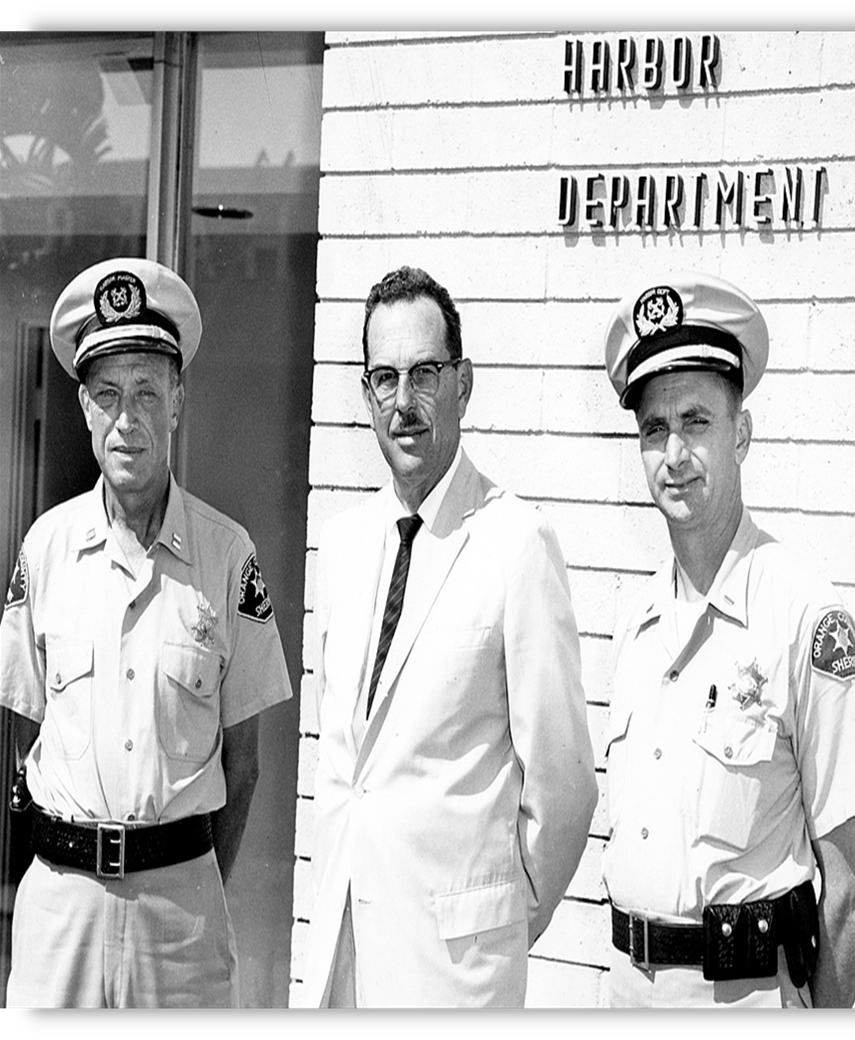
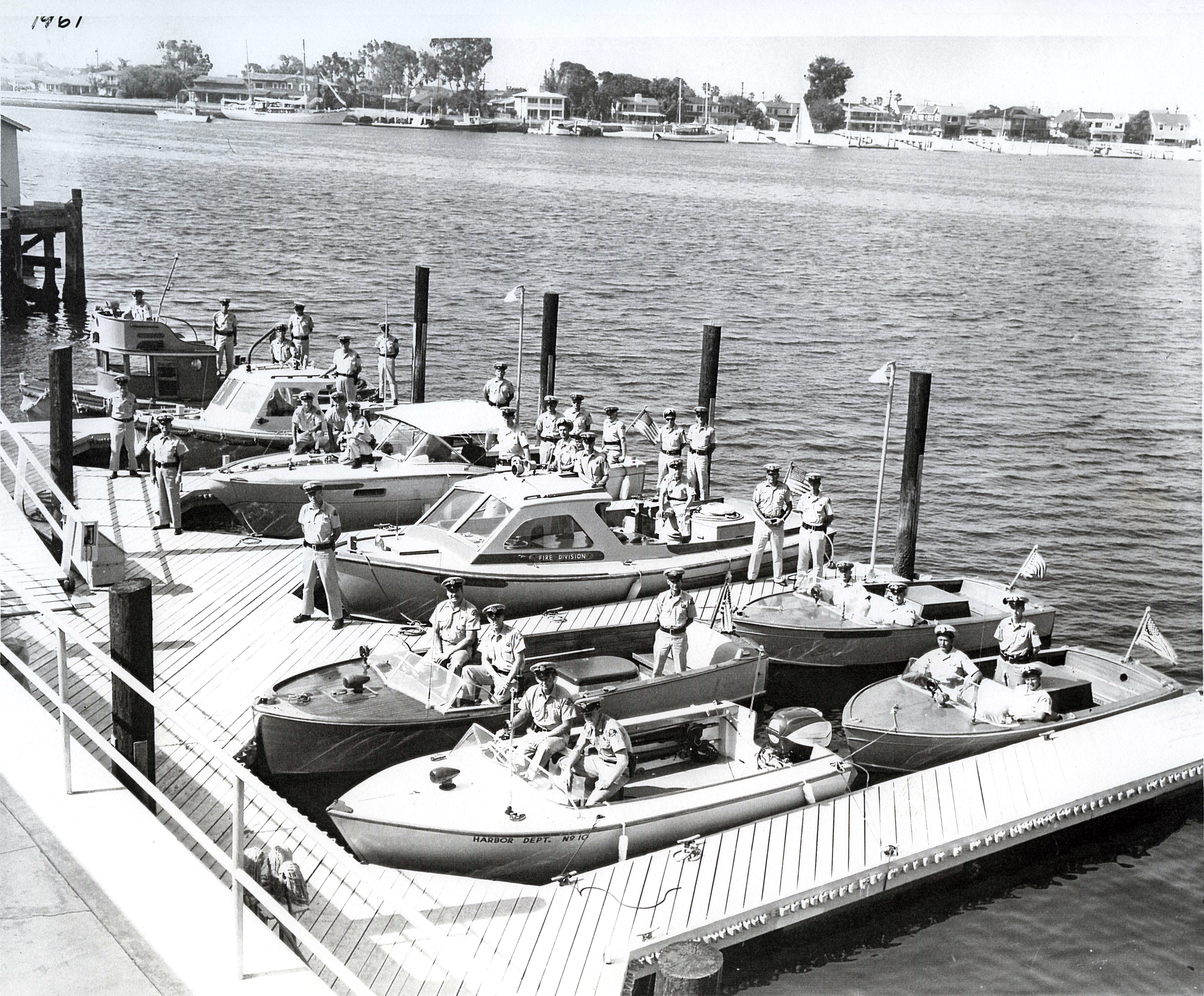
Harbor Patrol Celebrates
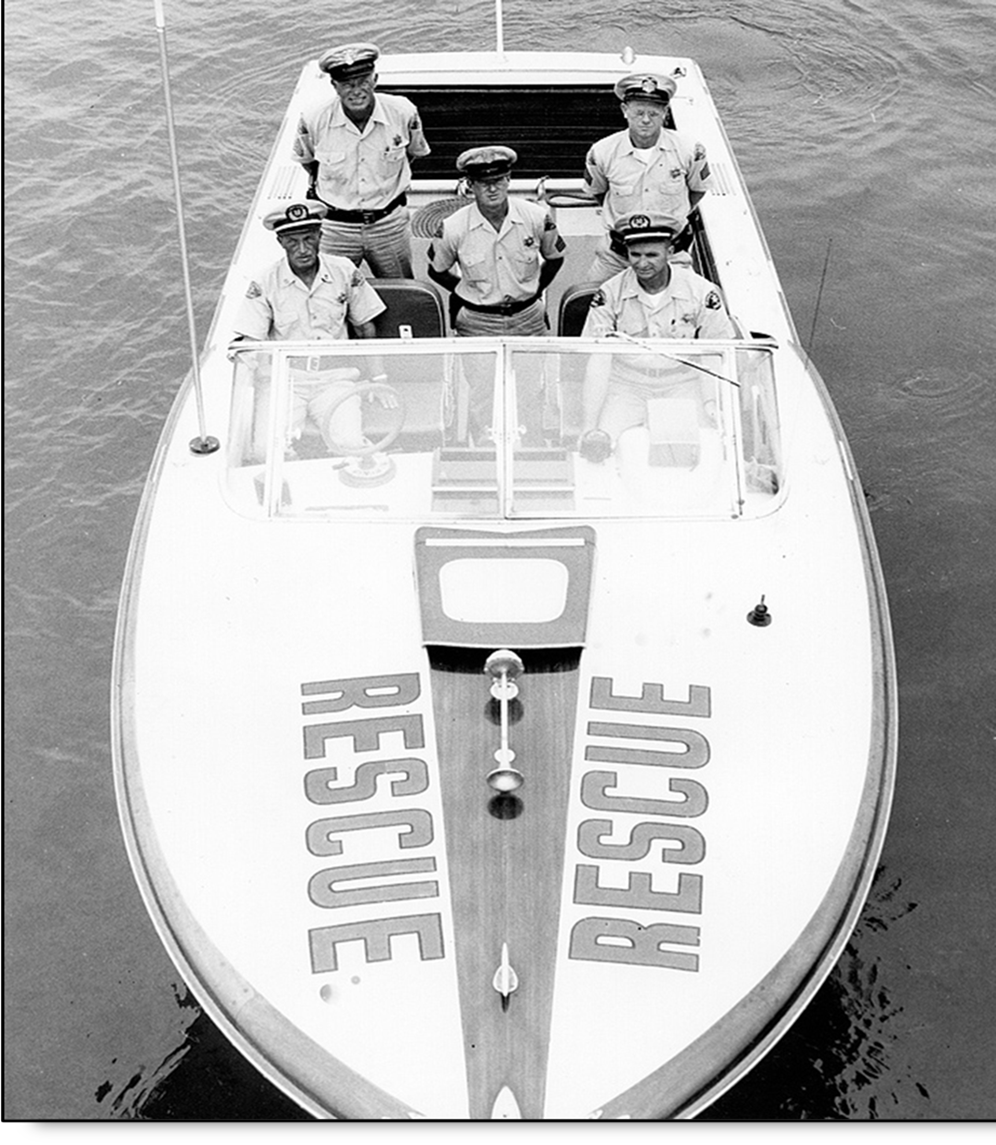
50 Years
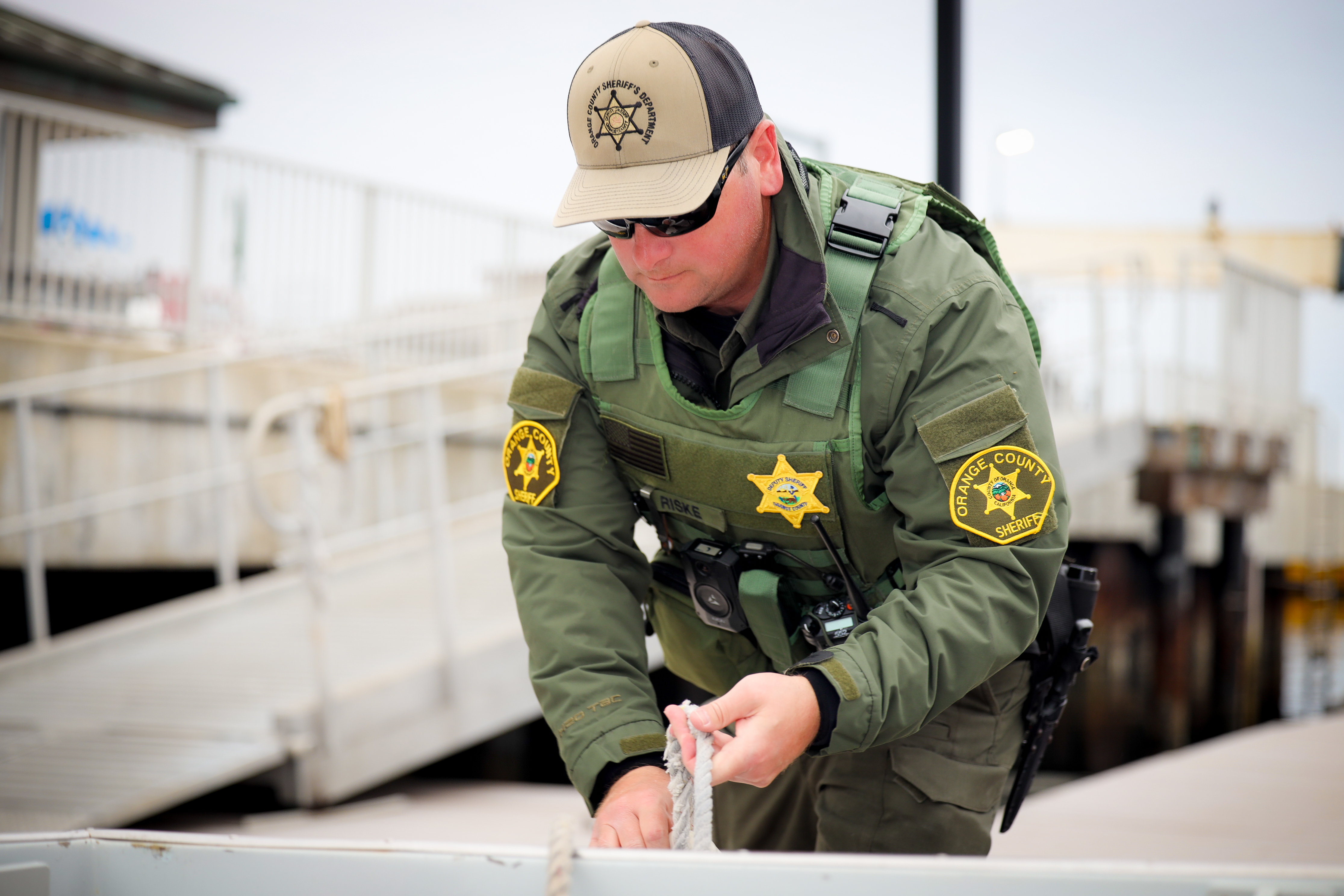
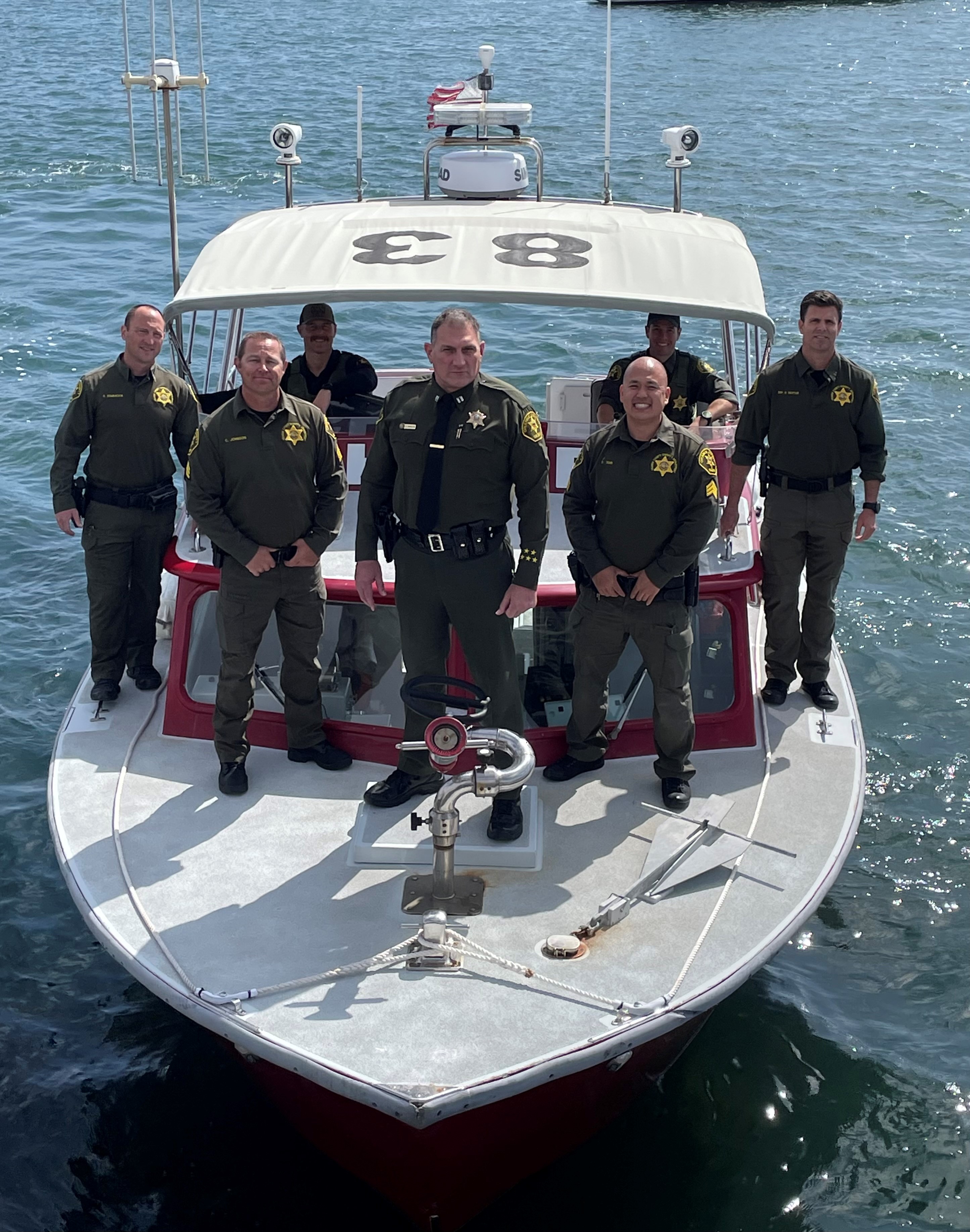
For the past five decades, the Orange County Sheriff’s Harbor Patrol Bureau has safeguarded the county’s most recognizable feature – its 43 miles of coastline.
Every year, Harbor Patrol deputies respond to over 10,000 calls for service from criminal violations, to marine fires, to search and rescue operations.
Harbor Patrol also plays a critical role in Orange County homeland security efforts, safeguarding our community against narcotics and human trafficking. Since 2021, deputies have conducted 341 missions and intercepted more than 100 smuggling attempts.
The commitment of the Harbor Patrol Bureau personnel has never wavered, and with the continued support of the community, their impact will endure.
A look at their work in FY 24-25
Harbor Patrol is a diverse assignment, requiring expertise and knowledge in a variety of disciplines from marine firefighting to waterway safety and enforcement. Here are their FY 24-25 highlights.
Harbor calls for service: 10,009
Response to boat fires: 6
Boat rescues: 55







Training: Where preparation meets purpose

For more information, visit ocsheriff.gov/join
Training is the distinction between reactivity and readiness.
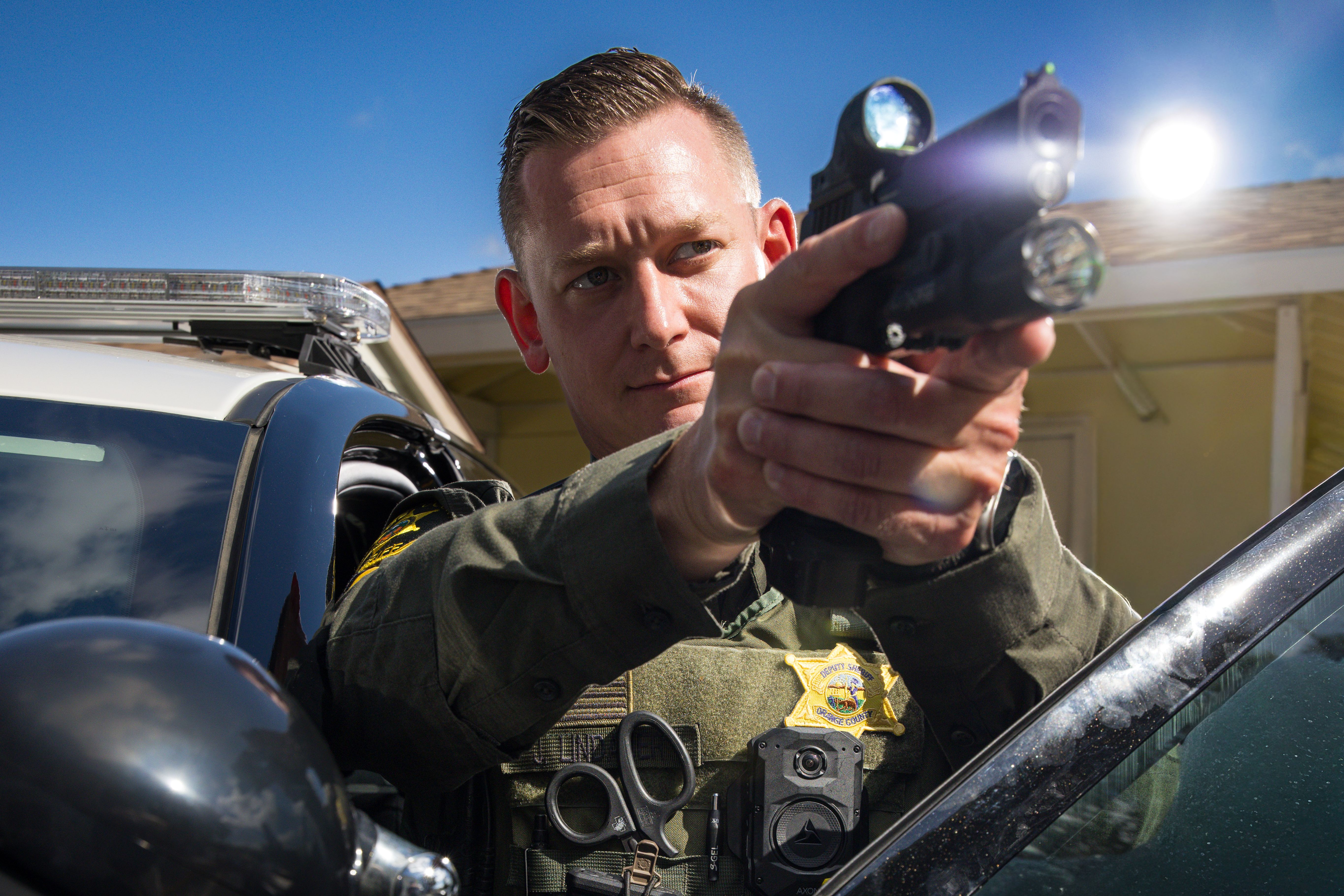
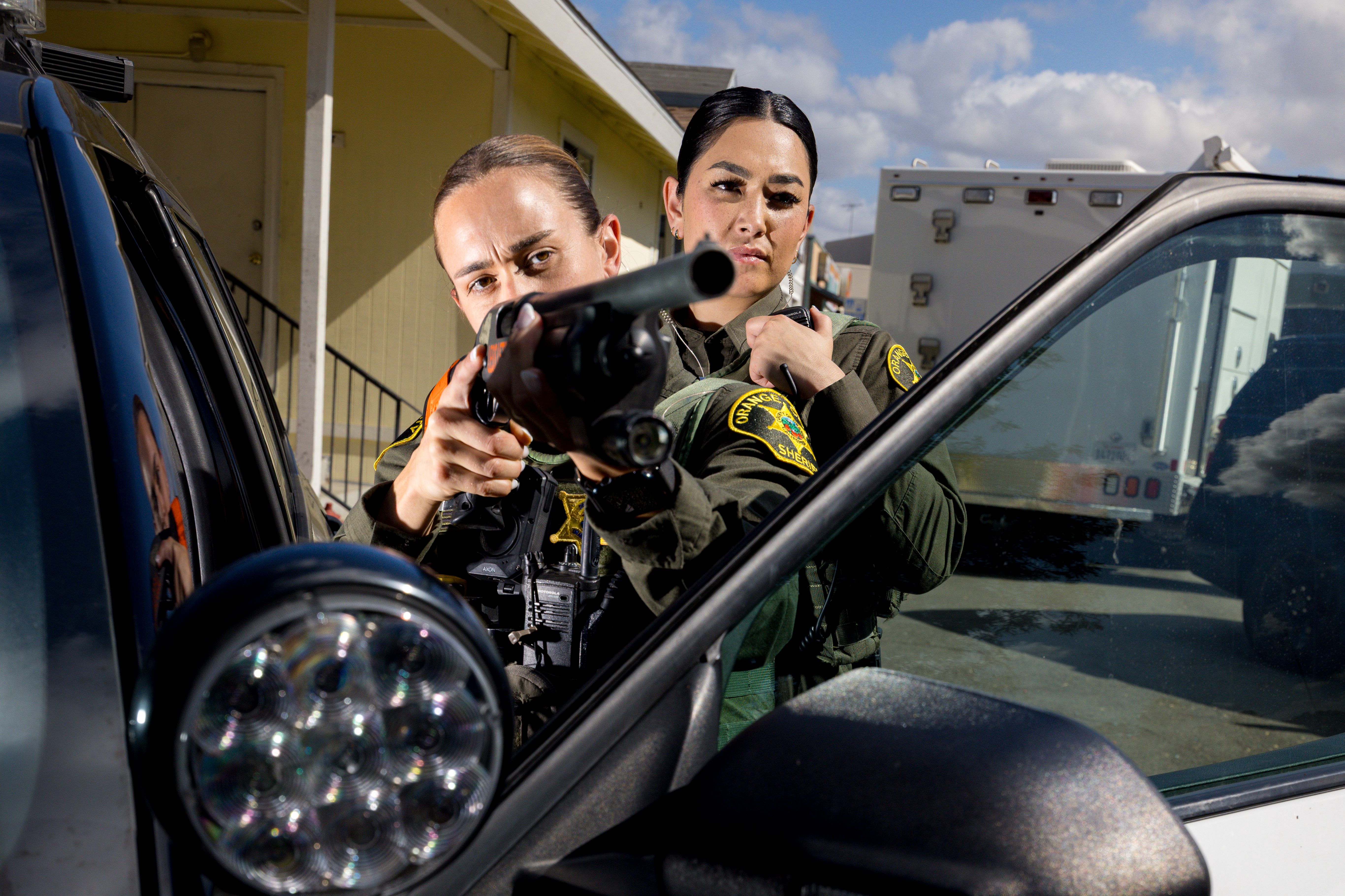
Beginning at the OC Sheriff Regional Training Academy, a top-tier law enforcement academy in the nation, we instill the skills and discipline essential for effective and professional policing.
Training does not end with graduation; it continues as the cornerstone of our commitment to the community, ensuring our personnel remain prepared to meet the needs of those we serve every day.
6 Academy Classes
255 Recruits
22 Law Enforcement Agencies Represented